
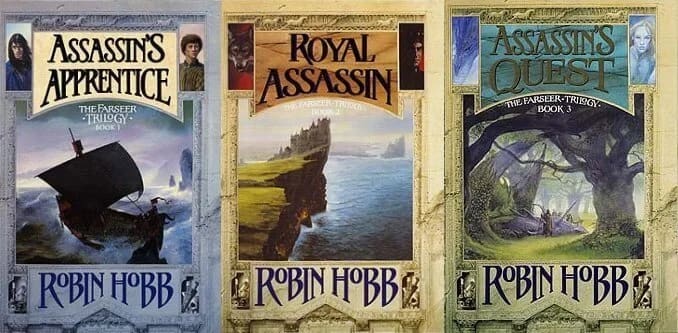
This post may contain affiliate links. As an Amazon Affiliate, I may earn a small commission from qualifying purchases at no extra cost to you. Read the full disclaimer **here*.*
Robin Hobb’s Assassin’s Apprentice is an old favourite of mine that I fell in love with as a teen and have revisited more than once, most recently when I was writing up the article The Best Robin Hobb Books: Six Duchies Books Reading Order**. **Robin Hobb weaves an impressive Grimdark tale where the protagonist must overcome impossible odds with the deck always stacked against him.
The first book in the Farseer trilogy, Assassin’s Apprentice, follows the journey of Fitz, an abandoned orphan who rises from obscurity to earn respect and become a figure others look up to. In this debut novel, we are introduced to the world, witness Fitz’s struggles, and encounter some of the remarkable characters who will populate the pages of its sequels.
What was most striking, reading it again, is how unhurried Hobb is willing to be. She trusts a slow apprenticeship, a string of small humiliations and small victories, to do more work than any single dramatic set-piece could.
Assassin’s Apprentice Plot - 4/5

Assassin’s Apprentice tells the story of Fitz-Chivalry. Fitz is abandoned on the doorstep of royalty and informed that he’s the bastard son of Prince Chivalry Farseer. He’s entrusted to the head of the stables, a man called Burrich, who becomes a father figure to him, teaching him right from wrong.
As Fitz grows older, he faces challenges due to being a bastard, encountering bullying, and powerful enemies. He struggles to fit into society and grows up lonely. However, during this period he discovers he has the Wit, an ancient and shunned magic that allows him to communicate with animals and he forms an enduring friendship and bond with a young wolf pup.
While Assassin’s Apprentice may not possess the high fantasy elements found in some other novels, the magic system is one I love. The Skill is based on mental experience and the Wit allows the user to bond with animals. Additionally, while there are no accounts of super mythological creatures in this first book, there are allusions to dragons which come into later books in the series.
What sells the pacing is how much of the book is spent on the unglamorous mechanics of training, mucking out stalls, memorising poisons, learning which lords can be trusted with a look and which can’t. It reads less like a fantasy plot ticking through its beats and more like an apprenticeship you’re actually serving alongside Fitz, which is exactly why the moments of real danger, when they come, land so hard. For a debut, the control Hobb shows over that slow burn is genuinely impressive.
The only reason that it doesn’t get five stars is that it’s the later books in the Farseer trilogy (and actually in the overall Elderlings series as Hobb develops her world-building) that really show Hobb’s true plotting abilities.
**Related **The Best Robin Hobb Books: Six Duchies Books Reading Order
Assassin’s Apprentice Characters - 5/5
Burrich is the character I keep coming back to. He never signs up to raise anyone’s bastard, and he never stops being gruff about it, but you watch him lose his composure the moment Fitz is careless with his own safety, and go quiet and careful in the moments Fitz actually needs comforting. It’s a portrait of someone who loves reluctantly and thoroughly, and it’s more convincing for how little Burrich himself seems to want it.
Fitz narrates the whole book, which means we get every one of his doubts in real time, and Hobb resists making him instantly likeable for it. He’s awkward, slow to trust, and frequently wrong about people. What makes the arc work isn’t charisma; it’s watching a boy who’s spent his whole childhood being talked over slowly learn that he’s allowed to speak, argue, and take up space among people who outrank him.
The antagonists are handled with similar restraint. Hobb doesn’t announce them with a flourish, some reveal themselves early, others take their time, and their dislike of Fitz reads less like villainy for its own sake than like ordinary court politics curdling around a boy nobody asked for. I won’t spoil who they are, but by the second act you’ll be actively rooting against them, which is really the only test that matters.
Overall Rating of Assassin’s Apprentice by Robin Hobb - 4.5/5
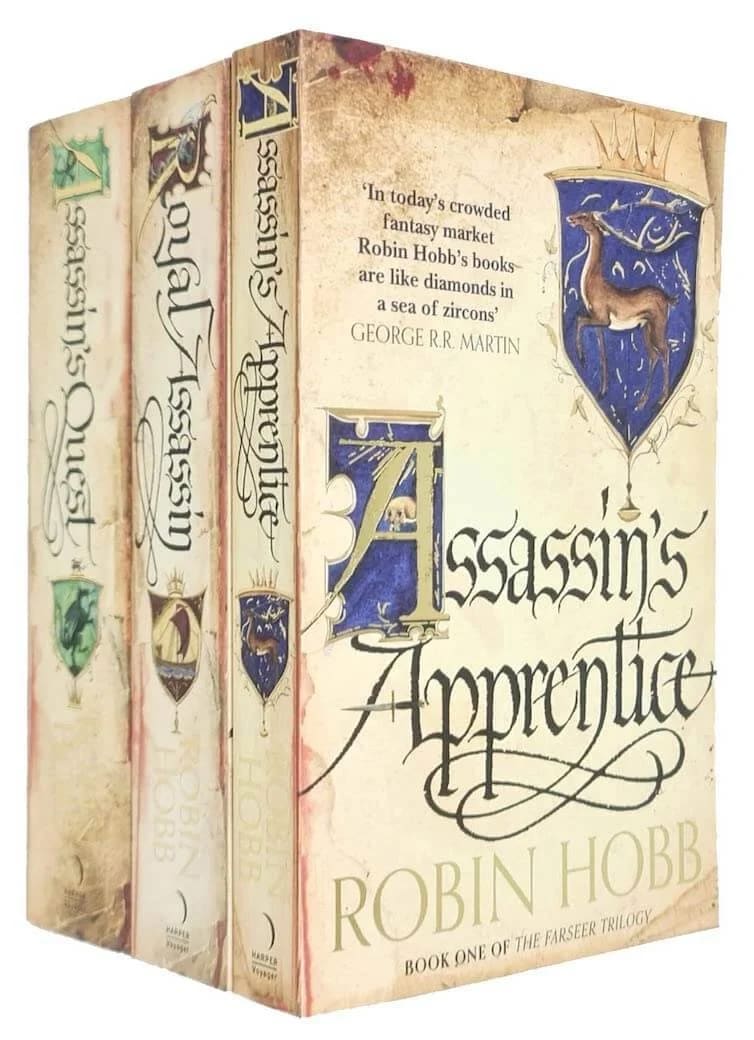
I was inclined to give Assassin’s Apprentice five stars, but I actually think the rest of the series gets even better.
Nevertheless, it’s a confident, patient opening to a series that only sharpens from here, and I’d point anyone toward it before they embark on a full journey into the realm of the Elderlings.
You May Also Like

Love books? You'll love Litloop.
Track your reading, send personal recs, and have real conversations about the books you love.
Create free accountFree forever · Beta now live · iOS & Android apps coming soon