
This post may contain affiliate links. As an Amazon Affiliate, I may earn a small commission from qualifying purchases at no extra cost to you. Read the full disclaimer here.
Why do we love books about Greek mythology? Greek mythology is one of the most enduring and captivating mythological traditions in the world, with its timeless tales of gods, heroes, and monsters. The characters grapple with all too relatable human emotions — love and loss, rage and jealousy and revenge.
These stories have inspired countless works of literature, art, and film over the millennia, and continue to influence culture with new and modernised retellings being published all the time. The work of Homer (alive around the 8th century BCE) formed a pivotal part of ancient Greek culture, helping people to understand the world around them and their place in it, and continues to resonate today.
In this article, we explore some of the best Greek mythology books fiction has to offer, perfect for seasoned enthusiasts and newcomers alike.
You might also like: 9 Dystopian Novels That Will Change How You View The World
Books About Greek Mythology
1. Clytemnestra by Costanza Casati
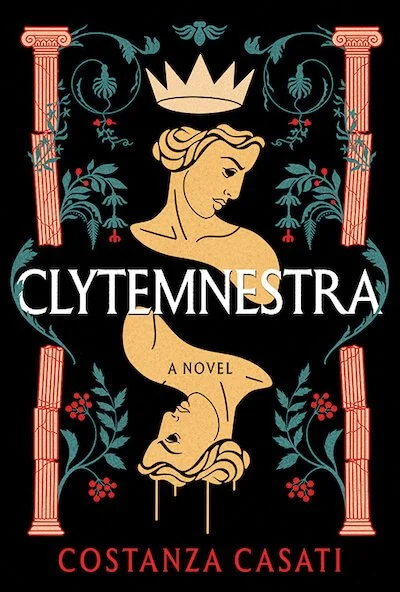
Clytemnestra, a debut novel by Costanza Casati, is a fascinating retelling of the life of one of the most infamous female villains in ancient Greece.
Born to a king, Clytemnestra marries a tyrant who sacrifices her child to appease the gods. She witnesses her husband waging wars on foreign shores and feels powerless to stop him. Fuelled by anger and a deep sense of injustice, she plots her revenge.
As her husband returns victorious, Clytemnestra must choose between acceptance and vengeance. She knows that either choice will bring infamy, but she bides her time and manipulates the gods into helping her exact her retribution. This novel is a gripping tale of a woman’s struggle against oppressive patriarchy and the lengths she goes to claim her rightful place in history.
2. Circe by Madeline Miller
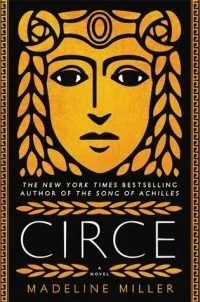
This beautifully written novel offers an alternate perspective from the point of view of Circe the Witch — most famously known for capturing Odysseus and turning his men into pigs in Homer’s The Odyssey.
It begins with Circe’s childhood in the house of Helios, the mighty Titan of the sun. Unlike her powerful father and alluring mother, Circe appears to possess no godlike abilities and finds herself shunned for her plainness. Eventually she discovers a power for witchcraft, and after creating a god and then being rejected by them, she turns her powers against her romantic competition. As a result, Zeus banishes her.
During the novel she encounters some of the most famous figures in mythology — the Minotaur, Daedalus and Icarus, Medea, and cunning Odysseus. This is a story of men and gods and wrath, of power and revenge, and of love. Circe is a triumph of storytelling and a must-read for fans of Greek mythology.
If you like Circe you will also enjoy Madeline Miller’s The Song of Achilles.
3. Mythos: A Modern Telling of Classical Greek Myths by Stephen Fry
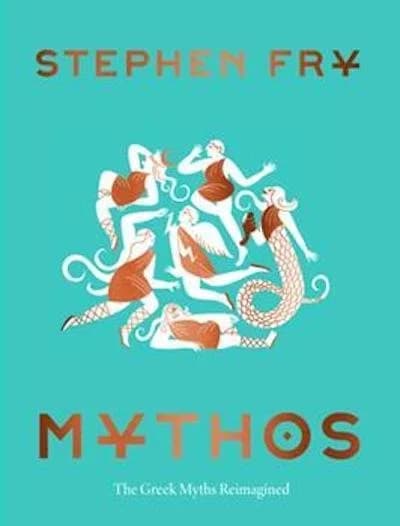
Mythos by Stephen Fry is a modern and witty retelling of the classic Greek myths, bringing ancient tales to life for both newcomers and enthusiasts alike. Fry’s distinctive writing style and humour infuse the adventures of Zeus and the Olympians with emotional resonance and original wonder. The tales are supported with select imagery of classical artwork and notes from the author providing rich cultural context.
The tales span from Pandora’s box to Prometheus’s fire and the punishments of the gods. Mythos celebrates the thrills and grandeur of the Greek myths, making them accessible, relatable, and deeply entertaining.
4. The Minotaur Takes a Cigarette Break by Steven Sherrill

In Steven Sherrill’s novel, the Minotaur — five thousand years old and long since departed the labyrinth — has found himself in the American South. Now living in a trailer park and working as a line cook at a steakhouse, he is no longer the terrifying creature he once was, having given up his taste for human flesh. Instead, he is a socially awkward and lonely being with basic human needs.
As his life begins to unravel over a two-week period, the Minotaur discovers the possibility of happiness and the capacity for love, despite feeling broken and alienated.
5. The King Must Die (Theseus #1) by Mary Renault
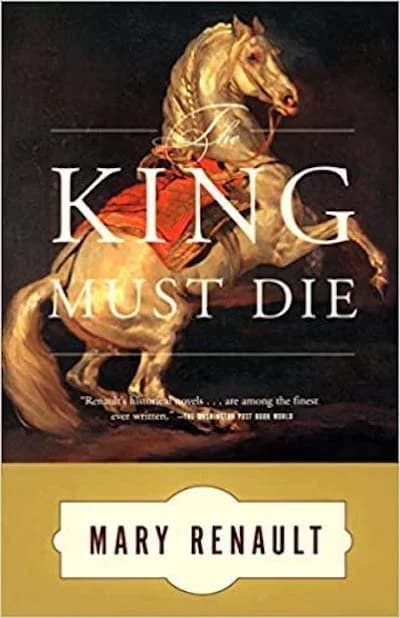
Mary Renault’s The King Must Die offers a vivid portrayal of the mythic hero Theseus, who famously defeated the Minotaur in Crete. Through Renault’s use of modern scholarship and archaeological findings at Knossos, Theseus becomes a fully realised character — a charismatic king with both strengths and weaknesses, guided by prophetic destiny.
The novel follows Theseus on his journey from Troizen to Eleusis, where he faces the titular death, and from Athens to Crete, where he proves his worth by mastering the challenge of jumping bulls. Renault expertly captures the spirit of Theseus’s time, making this book both a page-turner and a daring work of imagination.
6. The Lion of Macedon by David Gemmell
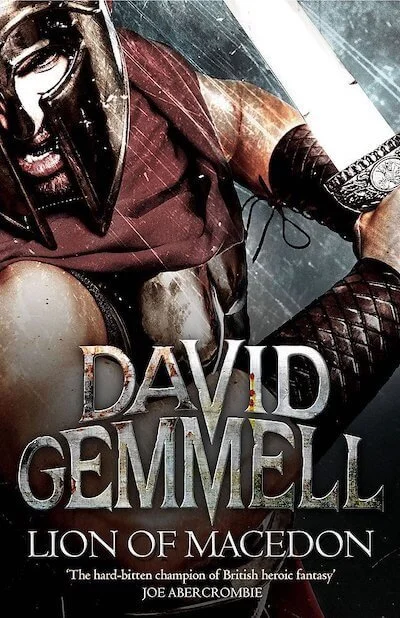
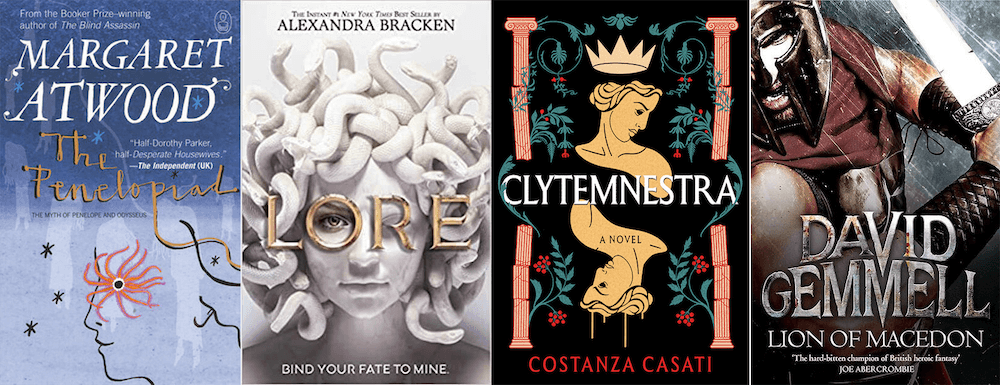
Regular readers of this blog will know that no list is complete without an entry from one of my favourite authors, David Gemmell. He wrote a few fantasy fiction books set in ancient Greece, with his Troy series — starting with Lord of the Silver Bow — becoming highly acclaimed.
However, my favourite of his books set in ancient Greece is The Lion of Macedon. This novel follows the character of Parmenion from his birthplace in Sparta, where he learns strategy from the famous Athenian and student of Socrates, Xenophon. From there he travels to Thebes and finally to Macedonia where he meets Philip of Macedon and lays the foundation for the conquest of Alexander the Great. He’s a mighty warrior, an unbeatable strategist, and hated by the gods. Along the way, he leads Thebes to beat Sparta in a pitched battle of equal numbers for the first time ever, meets Aristotle, and travels to the underworld.
Related: How To Read David Gemmell’s Drenai Series
7. The Penelopiad by Margaret Atwood
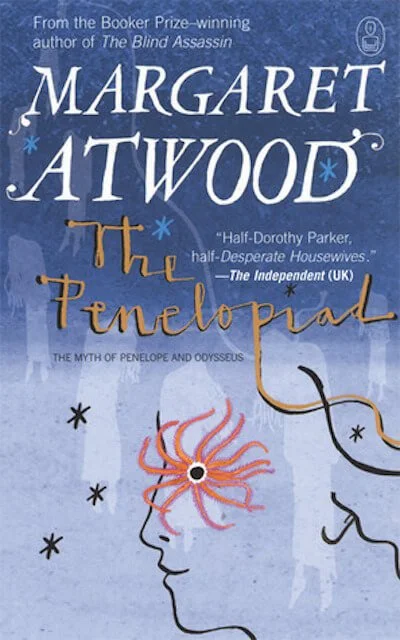
Margaret Atwood has returned with a witty and perceptive retelling of the myth of Odysseus, told from the perspective of Penelope. In the foreword, Atwood explains her decision to give Penelope and the twelve hanged maids the opportunity to tell the story.
The maids form a Chorus, singing and chanting, and questioning the events that led to their hanging and Penelope’s true intentions. Atwood believes the story as told in the Odyssey has too many inconsistencies, and she has always been troubled by the fate of the hanged maids. In The Penelopiad, Penelope is similarly haunted by their deaths.
8. Stone Blind by Natalie Haynes
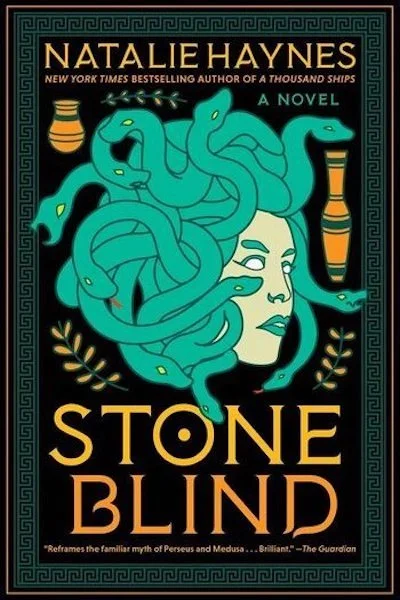
Medusa, the youngest of the Gorgon sisters, is the only mortal in her family of gods. Unlike her siblings, Medusa ages and experiences change and weakness. When the sea god Poseidon violates her in the temple of Athene, the goddess punishes Medusa instead of him, forever transforming her. Her hair is replaced by writhing snakes, and her gaze can turn any living creature to stone.
In Stone Blind, classicist and comedian Natalie Haynes turns our understanding of this legendary myth on its head by bringing empathy and nuance to Medusa’s story. The novel challenges the portrayal of women as monsters, punished for the assault of powerful men, and brings a fresh and timely perspective to one of the earliest stories of its kind.
9. Gods Behaving Badly by Marie Phillips
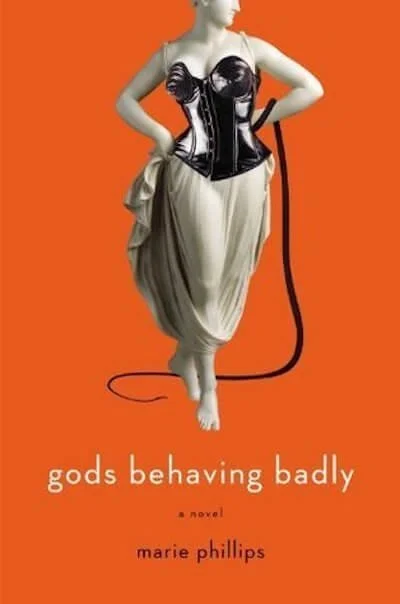
The Greek gods of Olympus are still alive and kicking in the twenty-first century, but their cramped London townhouse is less than ideal. To make ends meet, they’ve had to take on day jobs — Artemis working as a dog-walker, Apollo posing as a TV psychic, Aphrodite taking calls as a phone sex operator, and Dionysus spinning records as a DJ. To make matters worse, their powers are weakening.
As tensions rise between Aphrodite and Apollo, the conflict quickly escalates into a battle that puts the fate of humanity at risk. Caught in the middle are Alice and Neil, two ordinary humans who must summon their own heroic qualities to save not only themselves but the world as well. Marie Phillips puts a modern twist on ancient mythology and asks whether or not mere mortals can rise to the level of the gods.
10. Piranesi by Susanna Clarke
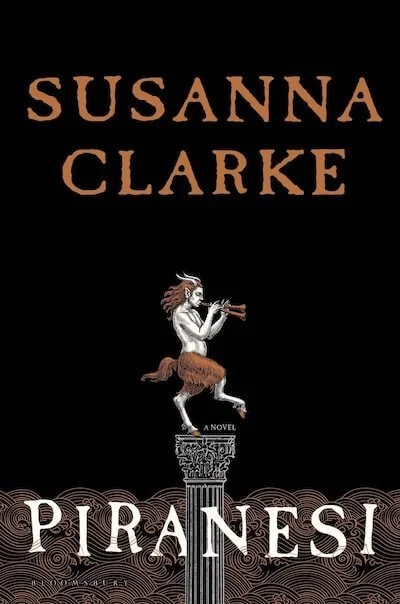
Piranesi’s dwelling is no ordinary edifice. Its rooms are limitless, its corridors endless, and its walls adorned with countless statues. Within the maze-like structure, an ocean is contained — waves crash up stairwells, rooms flood within moments. But Piranesi is unafraid; he comprehends the tides as he does the labyrinth’s layout.
Apart from Piranesi, there is just one other individual who frequents the house — a man referred to as The Other, who visits twice a week to solicit aid with researching A Great and Secret Knowledge. Yet, as Piranesi ventures deeper, clues surface of another presence, and a ghastly reality starts to unravel, exposing a world beyond Piranesi’s familiar realm.
11. House of Names by Colm Tóibín
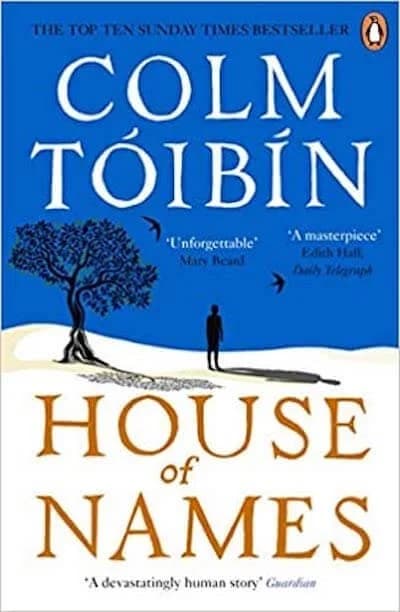
Agamemnon makes a fatal decision on the day of his daughter’s wedding: he orders her sacrifice before taking his army off to win a glorious victory in battle. Three years later, he returns home only to find that his murderous action has triggered a chain reaction of violence within his own family. His wife seeks his death, and his children, Electra and Orestes, are pulled into a world of whispered commands and secret journeys through the palace’s hidden chambers.
As Electra silently watches the family’s game of innocence and Orestes is forced into dangerous exile, they must find a way to right the wrongs of the past, even if it means committing a terrible and barbarous act. House of Names is a stunning work of literature that explores themes of betrayal, longing, and vengeance.
12. The Wolf Den by Elodie Harper
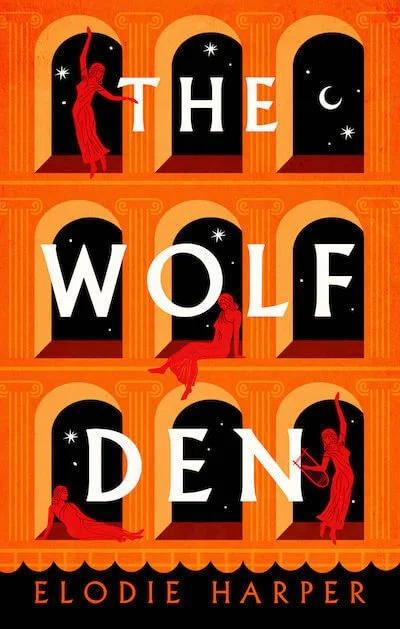
Amara was once a cherished daughter, but her father’s death left her family in poverty. Sold to a brothel owner in Pompeii, her sharp mind and resourcefulness are of no value in a place where she is only prized for her ability to attract customers.
Despite the oppressive conditions, Amara refuses to lose her spirit and bonds with her fellow she-wolves who walk the streets of Pompeii during the day. In the bustling city, Amara learns that everything has a price — including her freedom. The Wolf Den explores the lives of women who have long been overlooked and reimagines the reality of the lupanar in Pompeii.
13. Lore by Alexandra Bracken
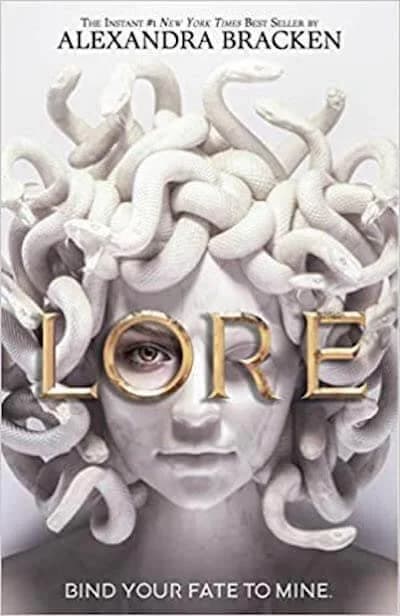
Every seven years, the Agon begins, forcing nine Greek gods to walk the earth as mortals and be hunted by the descendants of ancient bloodlines, who seek to kill a god and take their divine power and immortality. Lore Perseous had fled this brutal world after her family was murdered by a rival line, turning away from the hunt’s promise of eternal glory.
However, as the next hunt approaches in New York City, a childhood friend believed long dead — Castor — and a gravely wounded Athena seek Lore’s help. Binding her fate to Athena’s and rejoining the hunt will come at a deadly cost, and may not be enough to stop the rise of a new god with the power to bring humanity to its knees.
14. Lore Olympus Series by Rachel Smythe
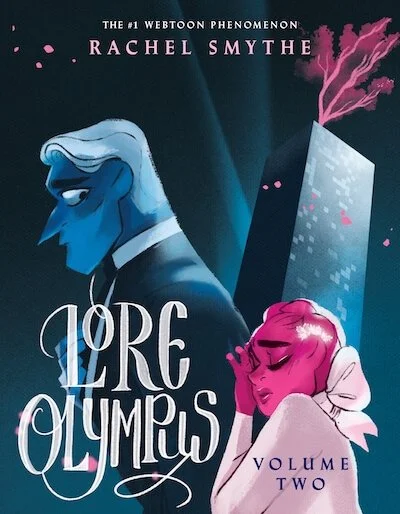
The final item on this list is something a little different — a graphic novel.
Lore Olympus is a modernised retelling of the classic love story between Hades and Persephone. Originally a webcomic (readable on the Webtoon app) you can now get the first volume as a graphic novel. The beautiful artwork invites you into a world of scandal, parties, and forbidden love.
This contemporary reimagining of the Greek pantheon captures the all-too-human emotions of these all-powerful deities as they battle and bicker amongst themselves, commit terrifying acts of wrath against humanity, and struggle with love and fear and jealousy. One of the most exceptional aspects is the way creator Rachel Smythe deals with trauma and abuse, powerlessness and power.
Books About Greek Mythology: Final Words
Greek mythology continues to captivate readers with its fascinating tales of gods, heroes, and monsters. The books listed in this article offer a variety of perspectives and interpretations of these ancient myths, from classic retellings to modern reimaginings — perfect for mythology enthusiasts or someone just looking for a good story filled with adventure, drama, and romance.
From Stephen Fry’s historical Mythos, to Madeline Miller’s sensitive alternate perspective in Circe, to the more comedic The Minotaur Takes a Cigarette Break by Steven Sherrill — each book offers a unique and captivating look into the world of Greek mythology. So sit back, grab your favourite book, and immerse yourself in the timeless tales of gods and mortals that continue to inspire us today.
You Might Also Like

Love books? You'll love Litloop.
Track your reading, send personal recs, and have real conversations about the books you love.
Create free accountFree forever · Beta now live · iOS & Android apps coming soon